
History of the "West Indies Regatta" Festival«
From the rediscovery of a small island lost in the Antilles to the 15th edition, the West Indies Regatta Festival tells the story of a know-how that almost disappeared, and of those who decided to do everything to save it!
1975 – 1992
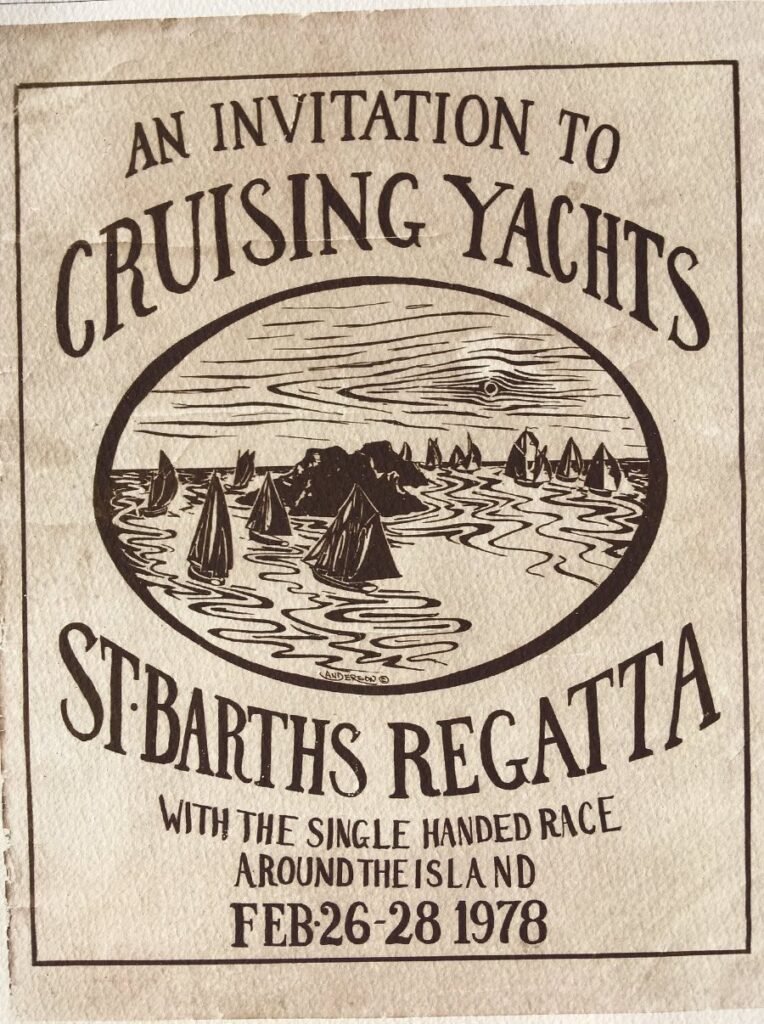
Loulou's Regatta
In 1975, there were no regattas in Saint-Barthélemy. Loulou Magras launched the first one. His wife, Jennifer May, joined him in organizing it in 1977. The committee consisted of only five people, but the entire island participated. Shopkeepers provided the beer. Locals donated the silver trophies and prizes, so every competitor went home with a prize. Sailors from Saint-Barthélemy joined the crew, and the organizers themselves collected the bottles from the streets. The race was free. It was never a one-man operation, and it wasn't a business.
At first, you mostly see gaff-rigged sailing ships and traditional boats. Then come three-masted vessels, J-Class yachts, schooners like Puritan, windsurfers, and especially cruise ships from all over the world: Australia, Turkey, the United States, the United Kingdom, New Zealand, South Africa, and neighboring islands. The last edition brought together more than 300 boats. The islanders bring their orchestras, brass bands, and jazz musicians. During the three or four days of the race, the streets of Gustavia are packed with people.
The regatta came to a halt when a new French law, passed after a fatal accident in a similar private race in the south of France, made it impossible to insure the boats involved. Loulou and Jennifer didn't want to be caught outside the rules. The regatta, originally started for fun, had also become too big and too complicated to organize. And they had their own lives: they were now cruising long distances on their traditional boat, Pluto.
The decree of March 18, 1993: the organizer of any sporting event must take out civil liability insurance, and the 1993 decree sets out the content of these contracts.
The accident: the Nioulargue, Saint-Tropez, 1995. During the race, the schooner Mariette (42 m) failed to yield the right of way and collided with the 6 m JI Taos Brett IV (11 m), which sank. The owner of Taos Brett, a doctor from Saint-Raphaël, died after being struck by a propeller from Mariette. The race was discontinued, then revived in 1999 as the Voiles de Saint-Tropez.
The decree of May 3, 1995 on nautical events at sea requires a single and identified organizer, responsible for the preparation, execution and monitoring of the event.
1992

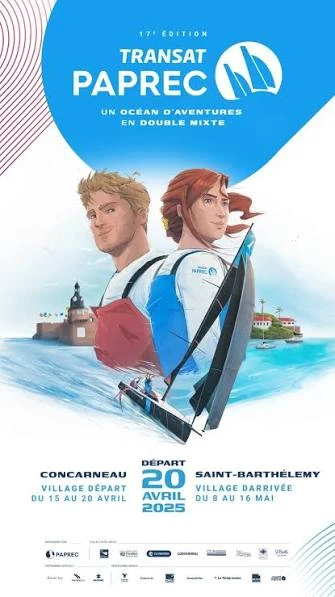
Start of the Transat AG2R, which became the Transat Paprec
François-Xavier Dehaye created the race in 1992 with AGRR (former name of AG2R La Mondiale). The idea: an event every other year, two sailors on board, and strictly identical boats, so that only the sailors make the difference.
The first race started from Lorient on October 11, 1992. Sixteen boats started, fourteen finished, all sailing first-generation Bénéteau Figaros. Jacques Caraës and Michel Desjoyeaux won in 24 days, 8 hours, 40 minutes and 34 seconds, crossing the finish line off Gustavia.
For this first edition, the organizers had to obtain a special exemption from the maritime authorities to reach Saint-Barthélemy. The local municipality refused to participate in the event, except by providing the docks free of charge. Therefore, the Saint-Barthélemy Yacht Club organized the first editions. A first association was then created, "St. Barth Yacht Racing," followed by another, "St. Barth Offshore Racing.".
Bertrand Charneau and his wife IB managed the organization on the Saint-Barth side for about twenty years. Very quickly, the island's hoteliers became fully involved, offering rooms in exchange for having their names on the boats' booms. Bertrand traveled to Concarneau for the start, photographed the boats with the sponsoring hotel logos, and displayed the photos in each corresponding hotel. The race was followed almost live in the hotels.
The race became the "Transat AG2R La Mondiale" in 2010. In 2020, after nearly thirty years, AG2R La Mondiale withdrew from sailing to focus on cycling. The 2020 edition was cancelled, and the race moved to odd-numbered years. In 2021, it was renamed the "Transat en Double Concarneau – Saint-Barthélemy".
Since 2023, Paprec, the French recycling leader which also operates in Saint-Barth, has been the title partner, and the race has been renamed "Transat Paprec". A major new feature: all duos must be mixed, composed of a woman and a man.
Today, the Territorial Tourism Committee (CTTSB) is organizing the arrival village on the Quai du Général de Gaulle, with a daily program of festivities and a maritime careers forum. The village bar is run each day by a different local association (Ti Ouana Salsa, SB Artists, Amicale des Boulistes, etc.). The Collectivity, the port of Gustavia, and the Saint-Barth Yacht Club are also fully involved. The race is being followed live every day in schools and at the Saint-Barth middle school.
The record is held by Nils Palmieri and Julien Villion: 18 days, 5 hours, 8 minutes and 3 seconds, set in 2021.
Bertrand Charneau has been involved in the organization of the West Indies Regatta since 2024, first for the safety of the race, then as treasurer of the association in 2026.
1997
The discovery of the Carriacou Sloops
Alexis Andrews, a nautical photographer based in Antigua, fell in love with a traditional wooden boat. He bought the wreck of Summer Wind, An old Carriacou sloop, sunk in English Harbour, Antigua, is restored, then sails to Carriacou, in the Grenadines, to find its builder. There, he discovers a dying world: shipwrights building magnificent wooden sailing vessels by hand on the beach, without written plans or modern machinery. The Carriacou sloops.
2005
Genesis launched
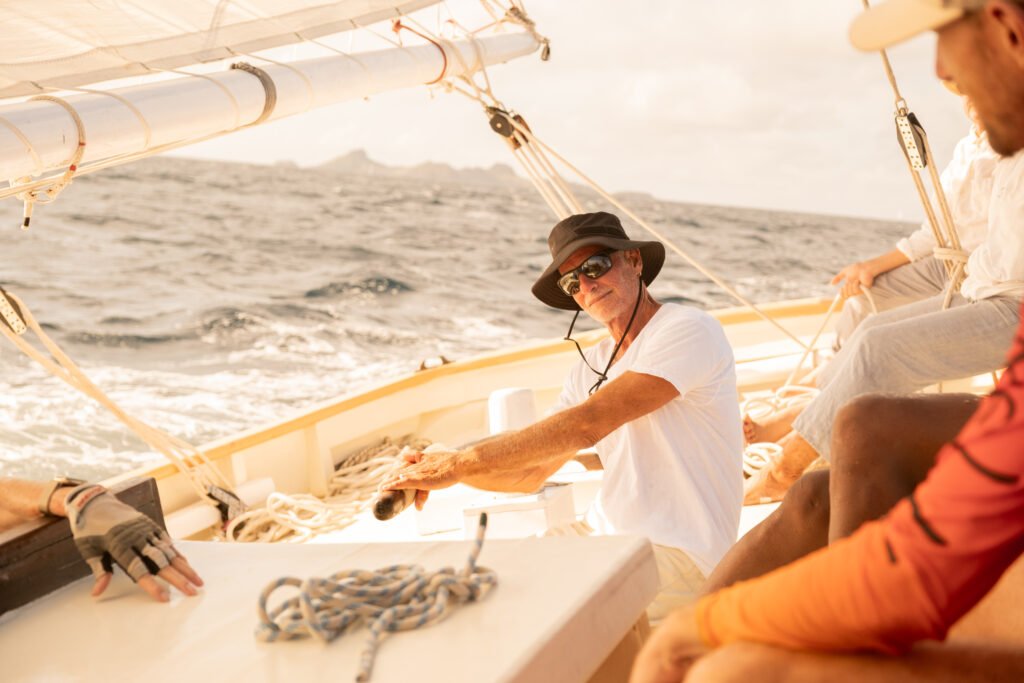
Alexis Andrews financed the construction of a sloop and entrusted the project to master carpenter Alwyn Enoe. Genesis It was born on the sand of Carriacou, shaped from memory. Alexis photographed each stage of the construction, to later make a book out of it.
2007
Gli Gli is passing through Saint-Barth
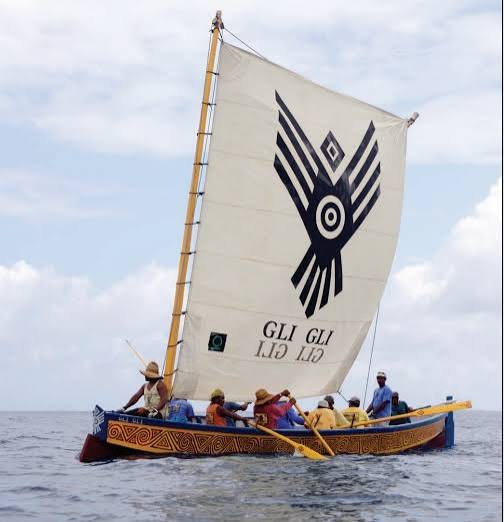
Aragorn sails with the Kalinago people in a large canoe hand-carved from the Dominica forest. Antigua, Saint Barthélemy, the British Virgin Islands. The stopover in Gustavia leaves a lasting impression: his story is all over the island. Discover his portrait: Aragorn.
2008
Two books and a journey
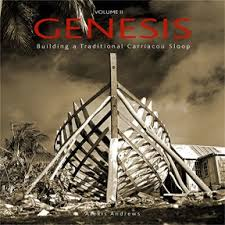
Alexis Andrews publishes Vanishing Ways And Genesis: Building a Traditional Carriacou Sloop. That spring, Doggy Watson, Alexis Andrews and Aragorn drove Genesis from Antigua to Foxy's Regatta, on the island of Jost Van Dyke in the British Virgin Islands — an event on the last weekend of May that has existed since 1974. Stopover in Saint-Barth, where Alexis exhibited his two books.
November 30, 2008
Beauty of Petite Martinique, Balo's last boat
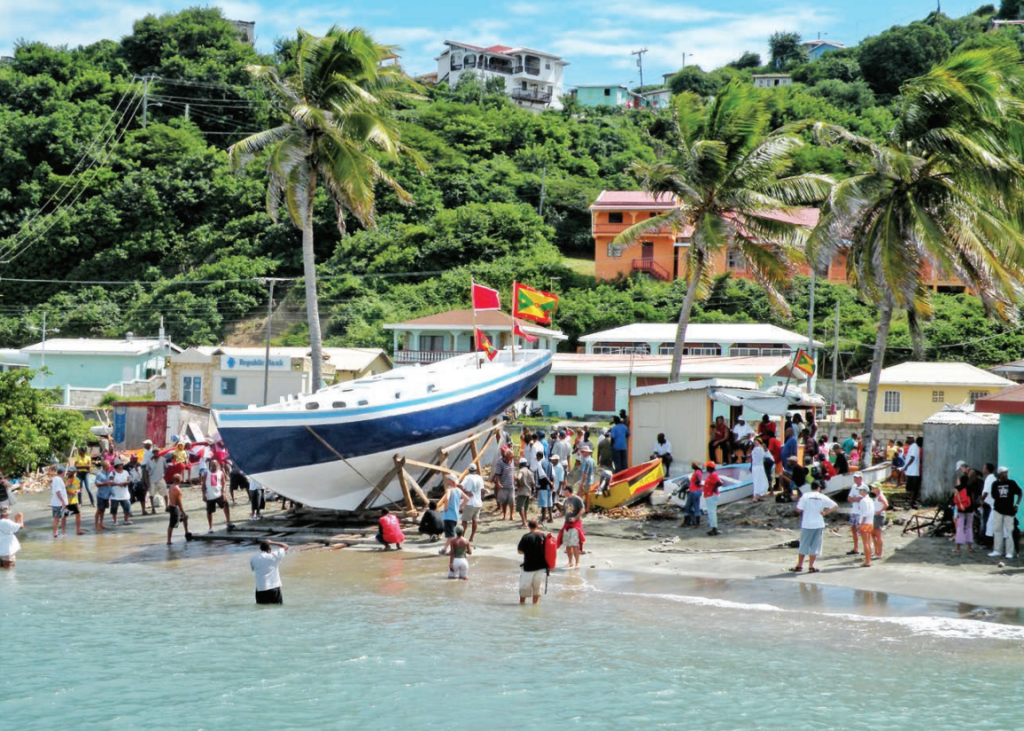
On the beach of Petite Martinique, in front of the whole village, the master carpenter Baldwin DeRoche, known as "Balo", launches the sloop Beauty of Petite Martinique. This will be his last sloop, but also the last one on this island.
2009
The first West Indies Regatta
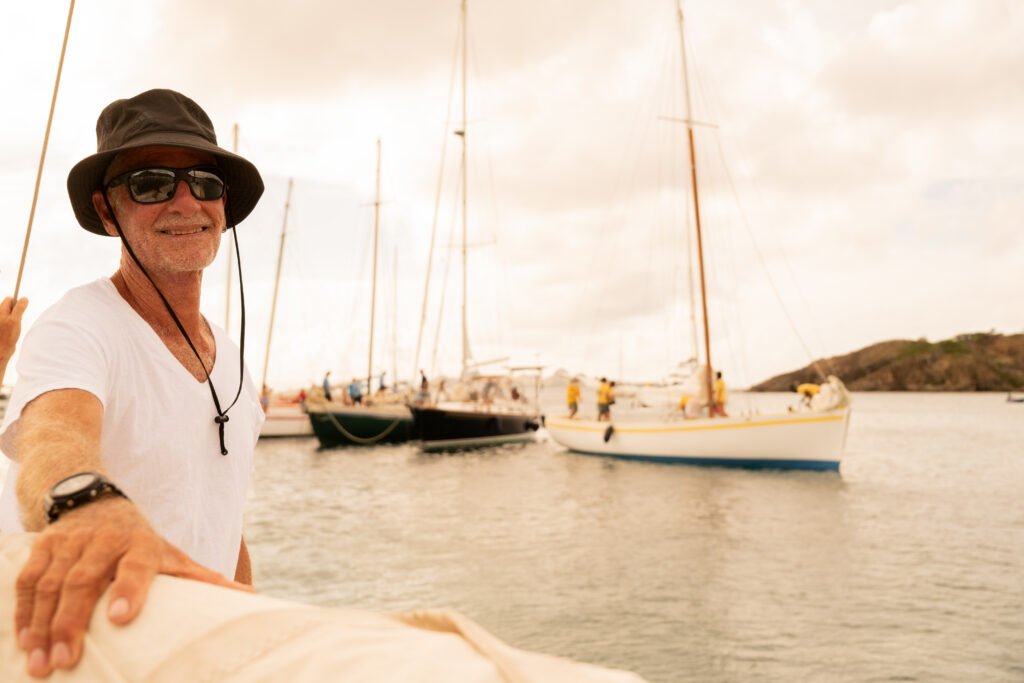
Having entered the Classic Regatta in Antigua, Alexis and Aragorn were looking for boats to accompany them to Saint-Barth. With Loulou Magras, Daniel Blanchard, and Bruno Gréaux, then the port director, eight boats entered Gustavia: Genesis, Ocean Nomad — today Navasana —, Tradition, Sweetheart, Good Expectations, Summer Cloud, the Nevis schooner Alexander Hamilton and the Bequia sloop Plumbelly. The local authority graciously provides the quay for mooring and the port forecourt for concerts. Everything starts from there.
Two people held the reins in Saint-Barth during the early years: Jennifer May, the wife of Loulou Magras (who organized Loulou's Regatta), and Lee Davidson, a friend of Alexis. They were the ones who helped Alexis and Aragorn set up the event, and who served as liaisons on the island for several years.
April 6-11, 2010
The first of the "Sails of Saint-Barth"«
It was launched by two friends, François Tolède and Luc Poupon, with the help of Annelisa Gee, a sailor based in Saint-Barthélemy, and Hervé Chastel. Tolède, originally from Royan and living in Saint-Barthélemy for about twenty years, was the Secretary General of the Saint-Barthélemy Tourism Committee in 2010. The island wanted its own event. Regattas were no longer held in Saint-Barthélemy, and they wanted to extend the tourist season, bring together beautiful boats, and foster a sense of community on the island. The regatta was initiated by the St. Barth Yacht Club and the Territorial Tourism Committee.
Richard Mille became a partner in 2010, then the main sponsor, lending its name to the event. The 12th and final edition took place in April 2023. At the end of 2023, Richard Mille withdrew, and the 2024 edition was cancelled due to a lack of a new partner. A new edition is being planned, possibly for 2028.
Les Voiles, like the West Indies Regatta, is intended as a legacy of Loulou's Regatta. Les Voiles, created officially with the Territorial Tourism Committee, is open to all types of boats, as Loulou's Regatta was towards the end. The West Indies Regatta, launched informally among friends, focuses on traditional Carriacou boats, as Loulou's Regatta was in its early days. Ultimately, the two are very complementary. We are advocating that, if a new edition of Les Voiles returns to Saint-Barthélemy, it be held the week following the West Indies Regatta, just as Antigua's Sailing Week takes place the week after the Classic Regatta. This would be an opportunity to cultivate our synergy with them. Furthermore, Les Voiles would be held on the first weekend of May and would thus benefit from the attractive rates of the off-season.
2011
The 3rd edition of the West Indies Regatta
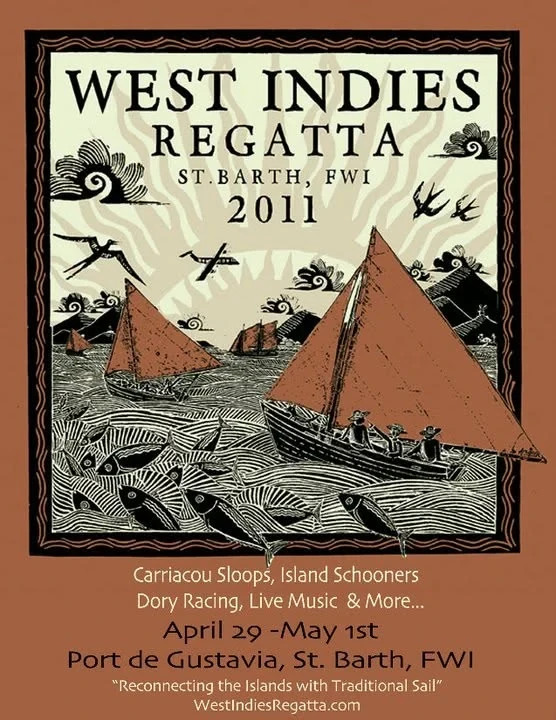
This is the first poster for the event, designed by Aragorn. He will create a new drawing almost every year.
Ten boats enter Gustavia: Genesis, Ocean Nomad — today Navasana —, Tradition, Sweetheart, Good Expectation, Summer Cloud, Pipe Dream, Zemi, the smallest, New Moon, and the Nevis schooner Alexander Hamilton.
Genesis crosses the finish line first in all three races. On the quayside, a distinguished guest: the Picton Castle, a three-masted barque returning from a round-the-world voyage, whose crew performs a Polynesian dance during the awards ceremony.
2012
The first market
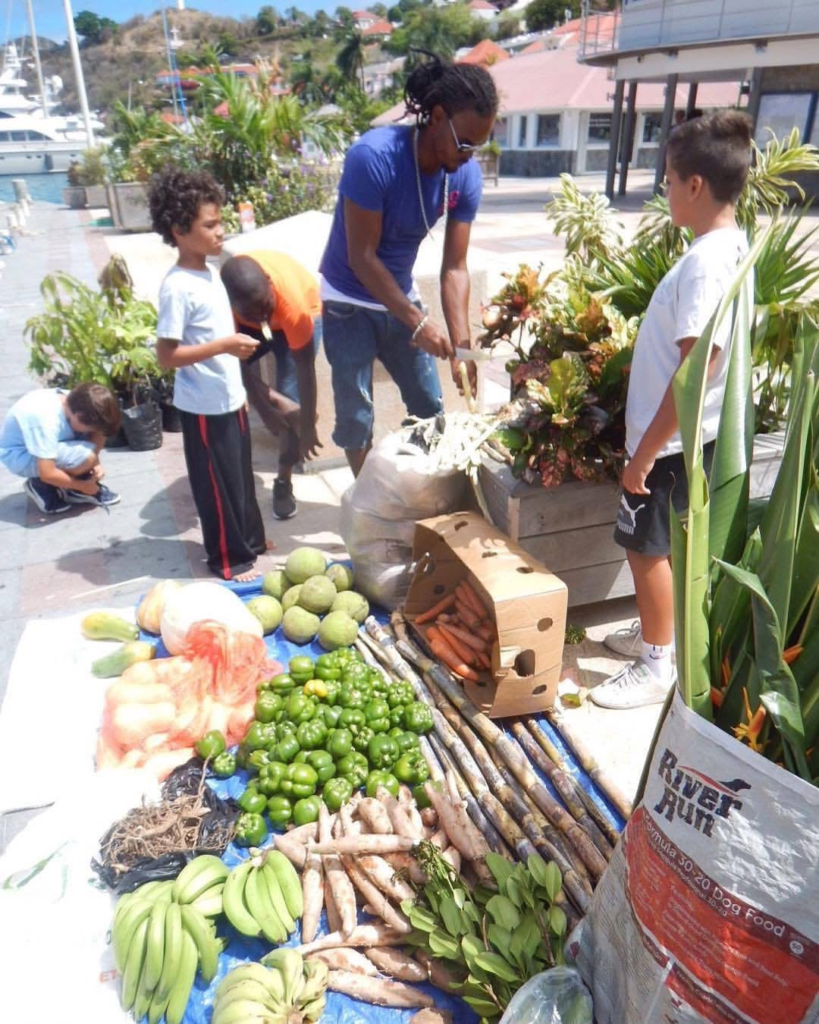
The sloops arrive laden. Fruits from Antigua and Dominica, t-shirts and pottery from Aragorn: the market is born in the holds. It will grow every year.
It is said that once, an entire cargo ship filled with bananas arrived from Carriacou.
In 2015, another workboat arrived from Carriacou, its holds full of coconuts: Laser, the largest sloop in Alwyn Enoe. Discover this boat: Laser.
Source: Gary Brown, All At Sea, June 28, 2015, West Indies Regatta: Connecting with Times Past.
2013
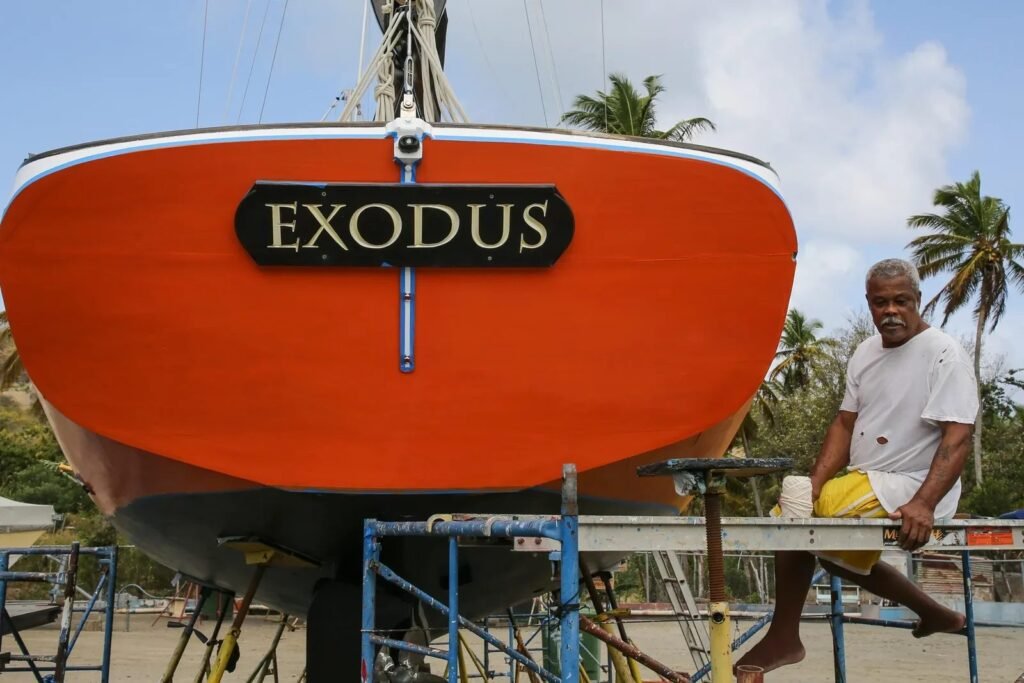
Exodus
Alwyn Enoe launches Exodus, a forty-foot sloop born on the beach at Carriacou. Alexis Andrews films every step of the way.
April 30, 2015
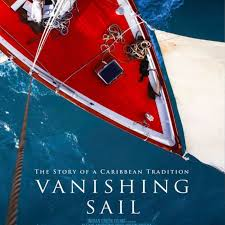
Vanishing Sail
The film is released. It follows Alwyn Enoe building Exodus, then the 350-mile voyage to Antigua. Its goal is explicit: to inspire others before it's too late.
2015
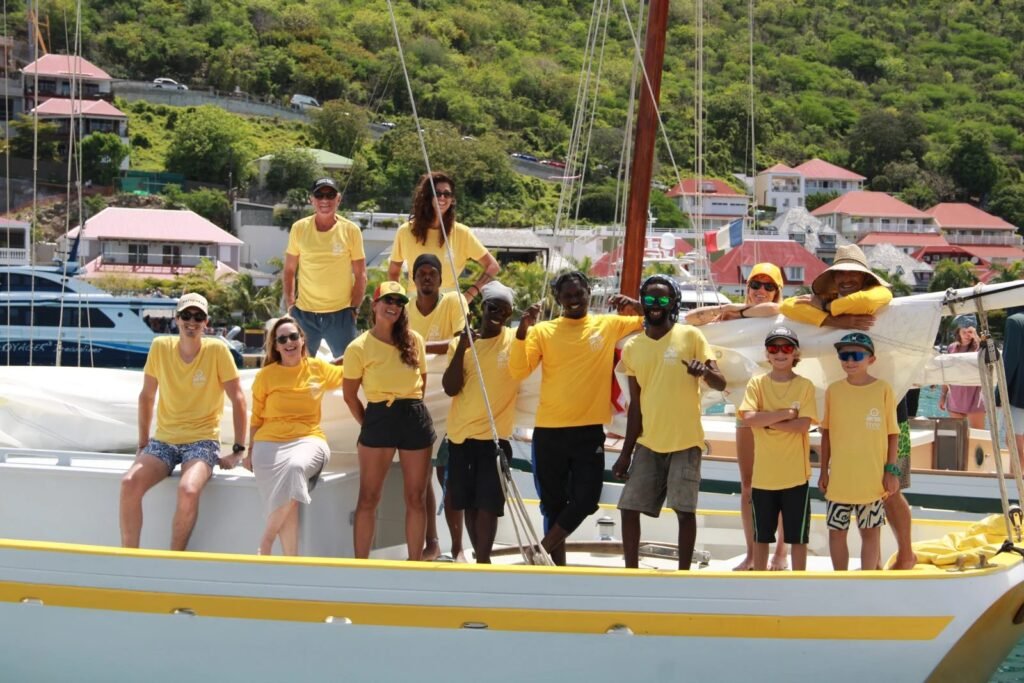
Free in St. Barth
Charmed by the West Indies Regatta and the lifestyle that surrounds it, Thierry de Badereau finances the construction of a new sloop. Alwyn Enoe is now elderly: he is his son Callistus, whom everyone calls "Cal", is the one who built it. It's the first boat he's sailed himself. The boat raced its first regatta in Gustavia in 2016.
2016
The Community makes a commitment
Loraine joins the team. The budget for the year: €3,000. Vanishing Sail The film was screened on the steps of the Collectivity building at the close of the 21st St-Barth Film Festival. Recognizing the cultural significance of the event, the Collectivity decided to increase its support the following year—concerts, communications, market equipment and staff. It became the festival's primary supporter and the condition for its survival.
September 2019
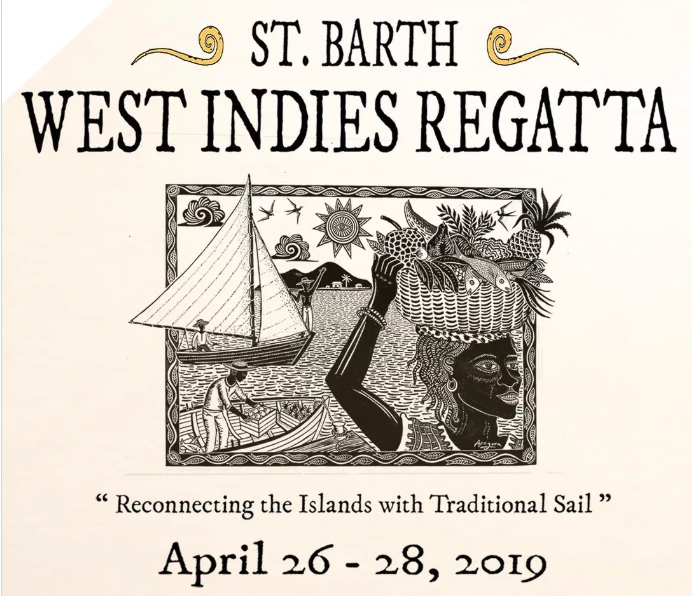
The association West Indies Traditionnal
The festival has established a structure to manage its organization. Loraine and Bruno, sister and brother, and Thierry de Badereau have registered the association "West Indies Traditionnal" with the prefecture under the 1901 law, and its creation was published in the Official Journal on September 28, 2019. Its purpose is to promote traditional Caribbean rigging and sloops, foster cultural exchange between the islands, and defend traditional crafts.
But Covid, a few months later, would put an end to this attempt at organization.
2020-2023
Three years in lockdown
The festival was cancelled two years in a row due to the global Covid-19 pandemic, and then a third year, in 2022, because of local elections.
2023
Official recognition by UNESCO
Supported by the images of Vanishing Sail and by the approach of the Government of Grenada, the traditional shipbuilding of Carriacou and Petite Martinique is inscribed on the intangible cultural heritage of humanity — as a skill to be safeguarded.
2023
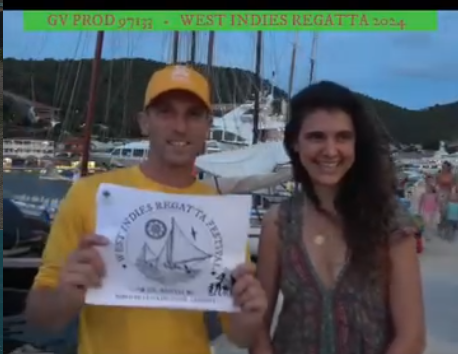
The regatta resumes and changes scale
Thanks to the efforts of Loraine, Rachelle, Valentine, and many others, the regatta was organized again. Loraine tried to rebrand it as a "festival," securing the inclusion of street arts. Circus performers and actors visited schools the week before, enlivened the market, and closed the weekend with a show on Sunday evening.
That same year, Vincent joined the organization and redesigned the layout of the market — spaced-out tents, stands on either side: the number of exhibitors jumped.
The following year, relocated opposite the Collectivité building due to construction work, the market became the largest on the island with nearly forty stalls. This would be Loraine's last appearance; she would eventually leave the island for a new life project.
2024
The gesture resumes
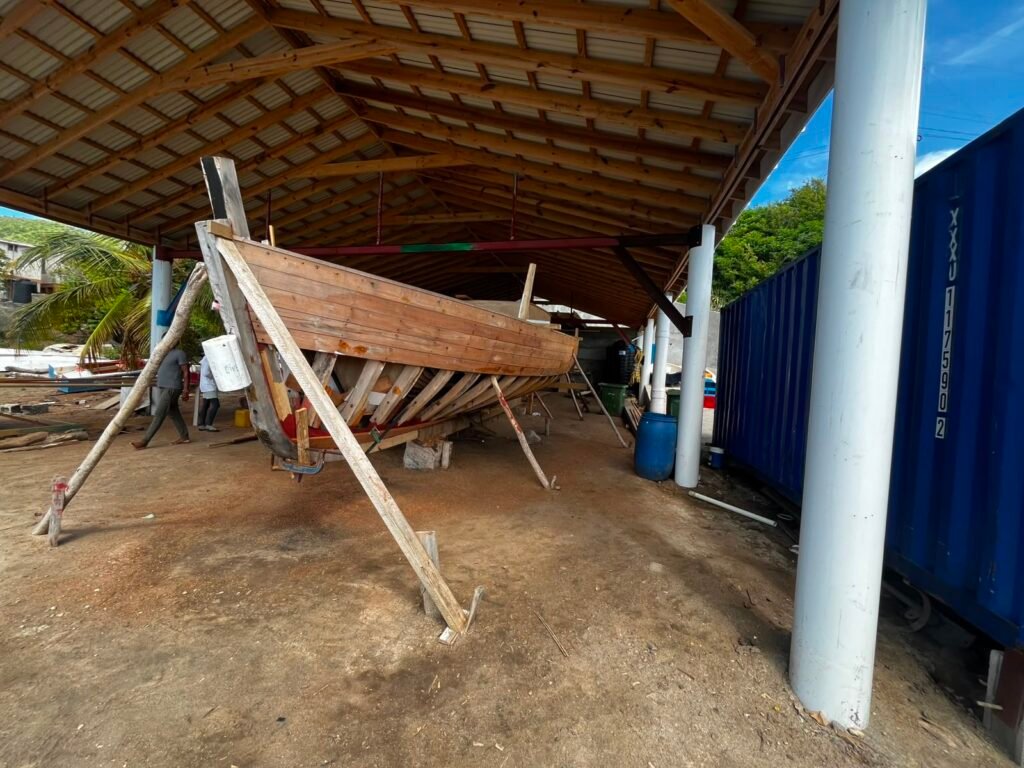
On July 1st, Hurricane Beryl devastated Carriacou and sank the Carriacou sloop Marie Stella. Grenada subsequently announced its intention to create a Boat Building School; a site was chosen in Windward.
Mr. Piero Zipoli, owner of the small Carriacou Marine shipyard, first financed the construction of a roof to shelter the building site, then the first ship, built under the master shipwright Callistus Enoe, son of Alwyn. The tradition is passed down through the generations. Discover his story: Piero Zipoli.
«Helping the Carriacou sloops is my way of thanking Carriacou Island for everything it has given me over so many years.»
— Piero Zipoli
2025
The pivotal year: the regatta becomes a festival
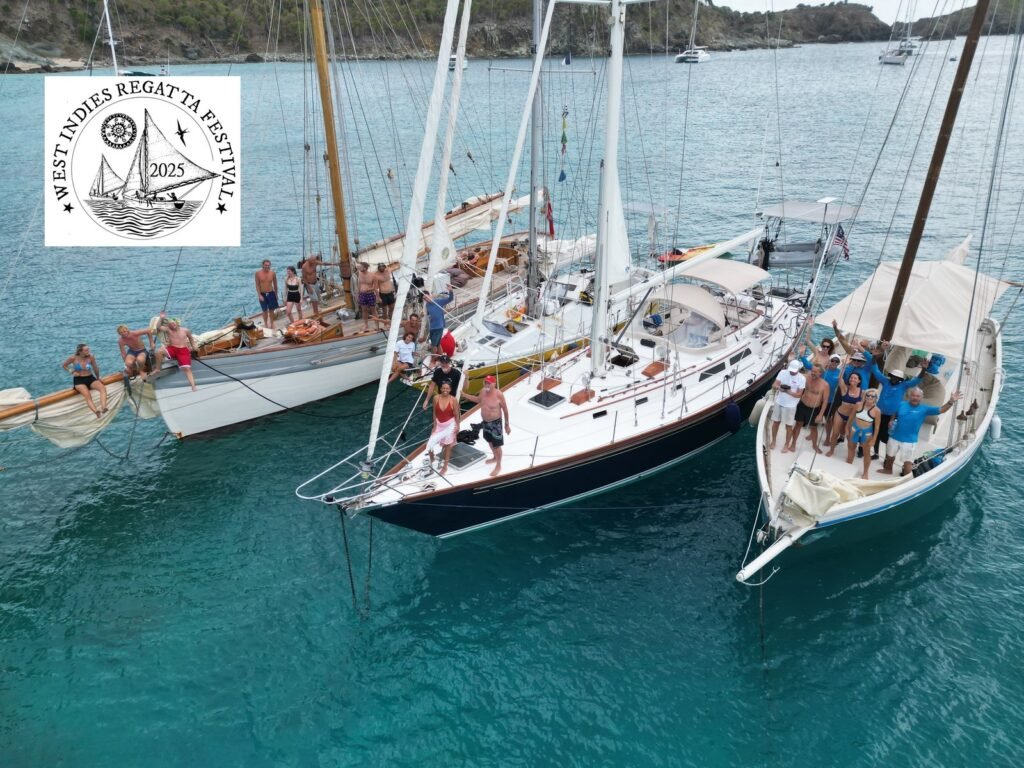
Loraine is no longer there, Valentine doesn't have much time left, Thierry's boat "Free in St Barth" sinks in a tragic accident, and the circus can't come. Boats are canceling one after another. The event is in doubt: "Will the Collectivity support a regatta without boats?"«
But the blue Carriacou sloop Navasana, Unwavering, he will maintain his participation! He will be joined at the last minute by a classic grey and white boat, over a hundred years old, coming from Europe., Nomad, a dark blue fiberglass boat from the British Virgin Islands, and Oumiak, a yellow aluminium boat from Saint-Barth.
Of course, Navasana will win all the races, proving that the Carriacou sloops are the fastest! More than 700 people will be counted on the docks on Saturday evening alone.
The rallying cry has been launched: "The West Indies is no longer simply a regatta, it's a cultural festival!" and "The low presence of Carriacou sloops is clear proof that we must redouble our efforts to safeguard them!"«
April 2026
The 15th edition with the founders and Carriacou
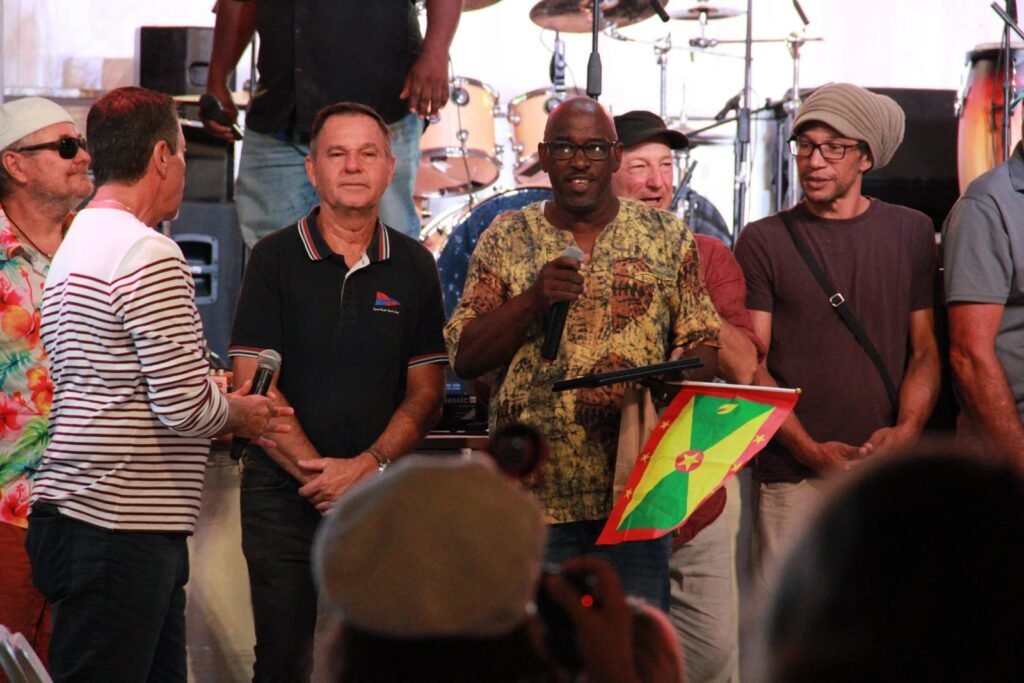
Five Carriacou sloops enter Gustavia: Genesis, Navasana, Spirit of Zemi, Summer Cloud And Free in St Barth. Three guests join them: Ragnar, a fiberglass boat from Saint-Barth, Nomad, from the British Virgin Islands, and Mange Nuage, the circus boat, from France and touring the West Indies.
The founders are present: Alexis Andrews, Aragorn, Loulou Magras, Bruno Gréaux — then port director in 2009 — and Daniel Blanchard's son. Three films are showing: Vanishing Sail, Quest of the Caribbean Canoe And Ocean by David Attenborough.
And, for the first time, the governments of Carriacou and Grenada sent an official representative: Dwight Logan, advisor to the minister of Carriacou and Petite Martinique. He came to announce the commencement of work on the shipbuilding school — and the order for three additional ships.
July 31 – August 2, 2026
The rediscovery of the Carriacou Regatta Festival!
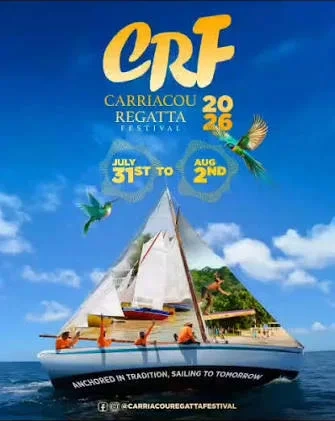
Vincent traveled to Carriacou and Grenada for the Carriacou Regatta Festival, cementing the link that now unites the two regattas. The Carriacou regatta has existed for sixty years, but it had not been able to take place for the previous two years, as the island was recovering from Hurricane Beryl, which devastated homes, wildlife and vegetation, and sank several Carriacou sloops: Marie Stella, Power Play, Pink Lady and Reality 2.
This was an opportunity for Saint-Barth to rediscover the island and its maritime heritage. But also, for Carriacou, to rediscover that it is not alone — and that the five Carriacou sloops present are not alone either: there are at least seven others in the northern Antilles.
Work then began to find them all and compile the first inventory of the Carriacou sloops still alive. You will find it on the page History of ships.
2027
The sequel
We hope that boats will once again make the route from Carriacou, and that the island will return to Gustavia.