
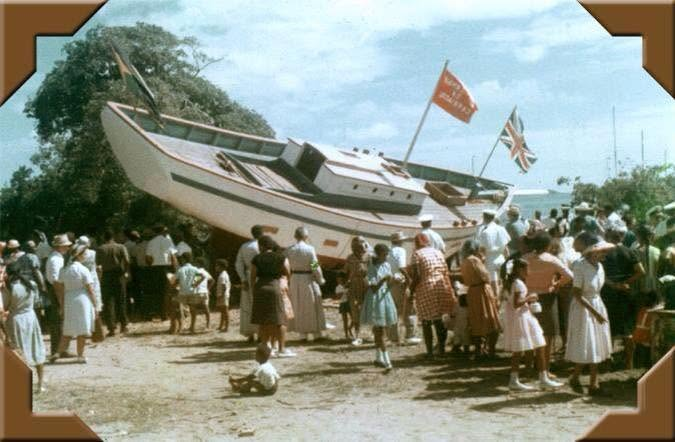
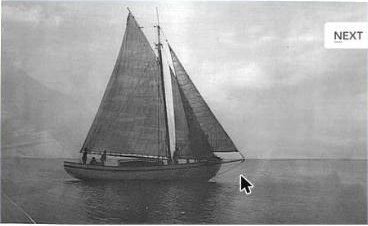
- Boat type — Carriacou sloop with gaff rig, without engine
- Launching — January 21, 1968, on Windward Beach, in Carriacou
- Length — 44 feet, or approximately 13.4 m — beam 13 feet, approximately 4 m
- Built by — Zepherine McLaren
- Ordered by — yachtsman J. Linton Rigg
- Owner — Captain John A. Smith, from 1977 until the shipwreck
- Shipwreck — in July 2021, off the coast of La Ceiba, Honduras
A man's gamble to save a profession
In the mid-1960s, Carriacou was still building boats, but fewer and fewer. Orders were dwindling, young people were leaving, and the know-how of the beach carpenters—building a forty-foot sailboat by feel, without written plans or machinery—was beginning to die out with those who possessed it. It was at this moment that J. Linton Rigg, a yachtsman based on the island and owner of the Mermaid Tavern in Hillsborough, chose to launch an idea that seemed like a provocation.
He commissioned Zepherine McLaren, master shipwright of Windward, to build a sloop designed for speed. Then he put 500 Eastern Caribbean dollars on the table and issued a challenge to the entire island: the money was for whoever could build a boat capable of beating his. The money was just a pretext. What Rigg wanted was for people to start building again.
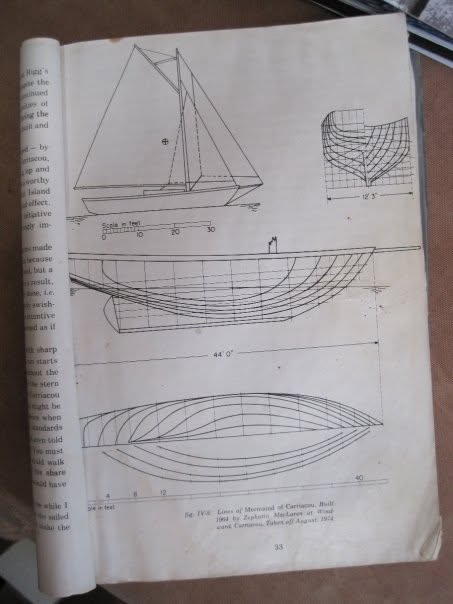
On Windward Beach, McLaren designed a 44-foot hull, 13 feet beam, moderate draft, lively bottom, fine entry, and a long stern. Far from a pleasure craft: the deck beams measured eight inches by eight inches. A boat built to carry cargo downwind in the trade winds, and one that would prove remarkably stiff under sail.
January 21, 1968: the whole island on the beach
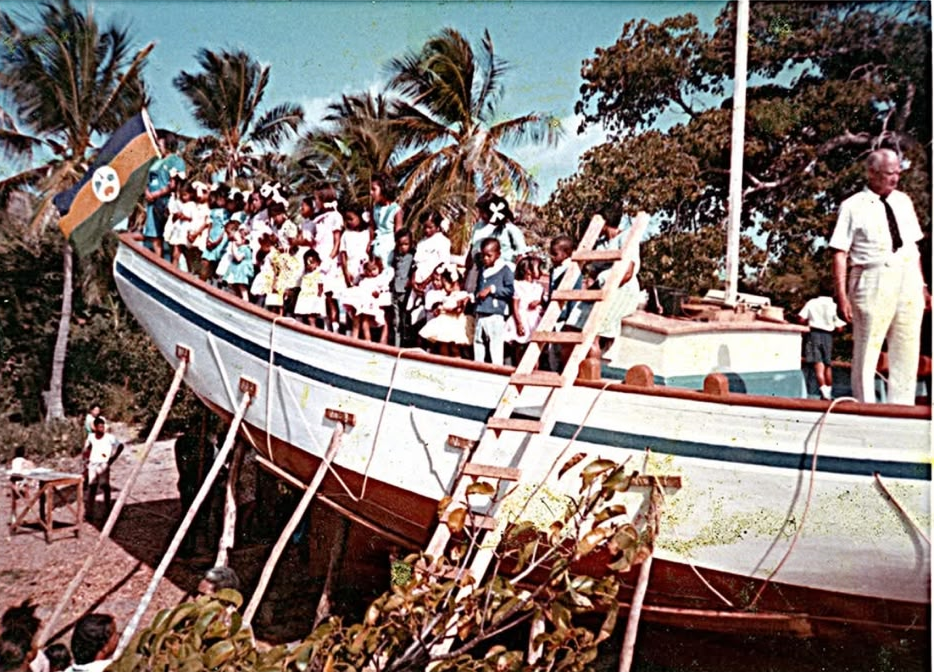
The launching of a sloop at Carriacou is not a shipyard maneuver: it's a celebration. On January 21, 1968, the white hull with its striped trim was lowered onto the sand at Windward, its bulwarks hoisted, the Union Jack snapping in the wind. Around it, the entire village was dressed in its Sunday best—hats, light dresses, children sitting in the sand at the foot of the bow. They pushed, they sang, they prayed, and the boat was lowered into the sea.
The date is given by Captain John A. Smith himself, under the photograph of the launch published by Gary Osborne: "Windward, Carriacou… Jan. 21 1968". Fifty years later, the ship is still sailing.
The boat that restarted everything
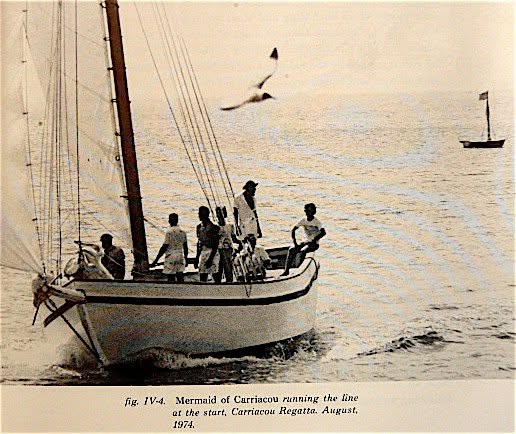
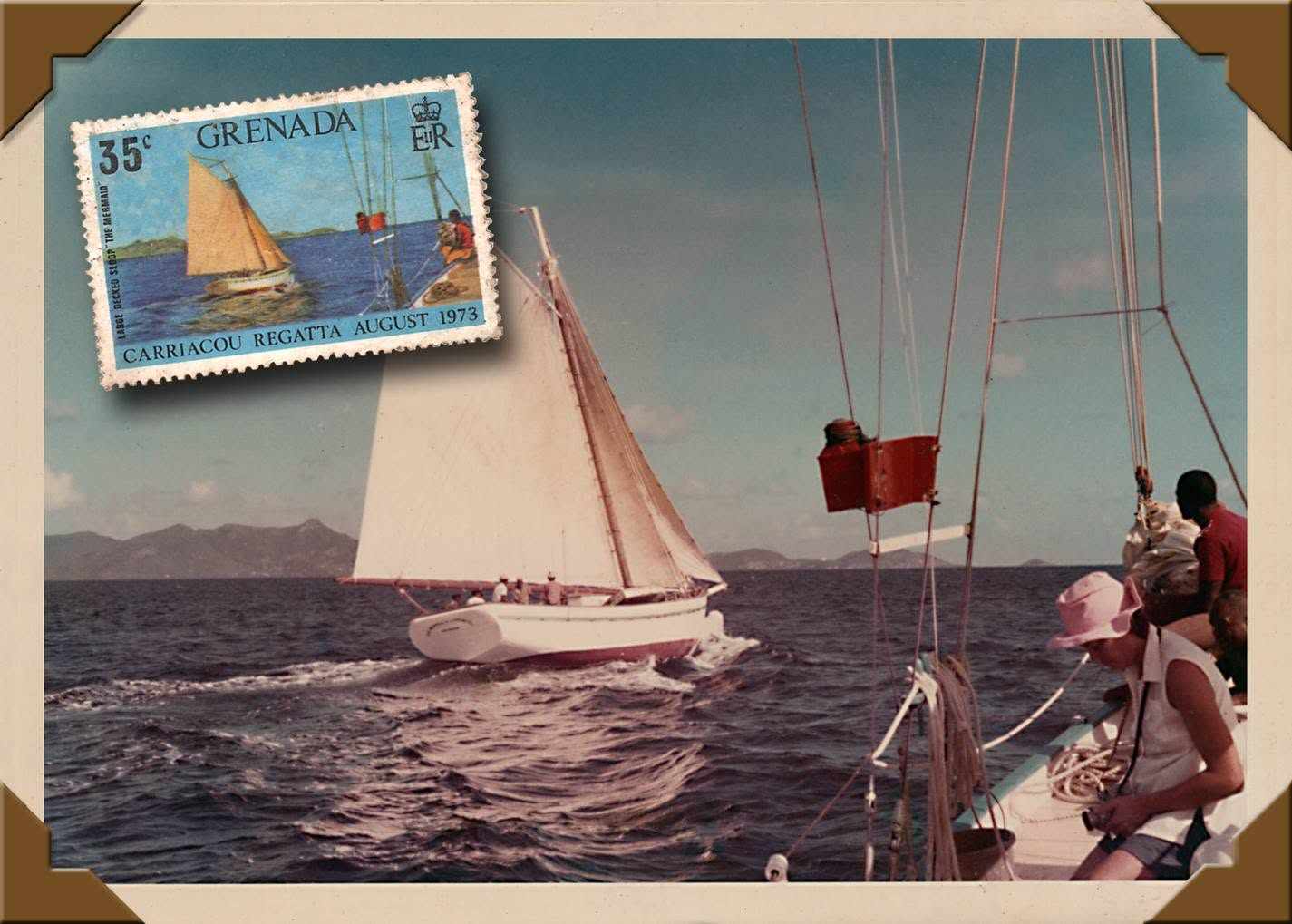
The gamble paid off beyond all expectations. Mermaid won, and won again: island gossip credited her with eight or nine victories in the Carriacou regatta before a cargo ship with light beams finally beat her. Above all, to try and surpass her, the shipwrights went back to work. They rebuilt, refined the lines, and discussed hulls over rum. Sloops from Carriacou set sail once more to trade along the Lesser Antilles.
From this challenge was born the Carriacou Regatta, which has become the oldest sailing event still held in the Caribbean — and, in turn, everything this website recounts. An entire island regained confidence in its craft, all centered around a single boat.
The boat became an emblem. In August 1973, Grenada issued a 35-cent stamp for the Carriacou Regatta, featuring the inscription "Large decked sloop 'The Mermaid'". The following year, the American photographer Douglas Pyle came to photograph its lines on the beach for his book. Clean Sweet Wind, dedicated to the last working sailing ships of the West Indies: the plan of this beach sloop, drawn without a plan, thus enters into the books of naval architecture.
1977: An American, a handful of dollars
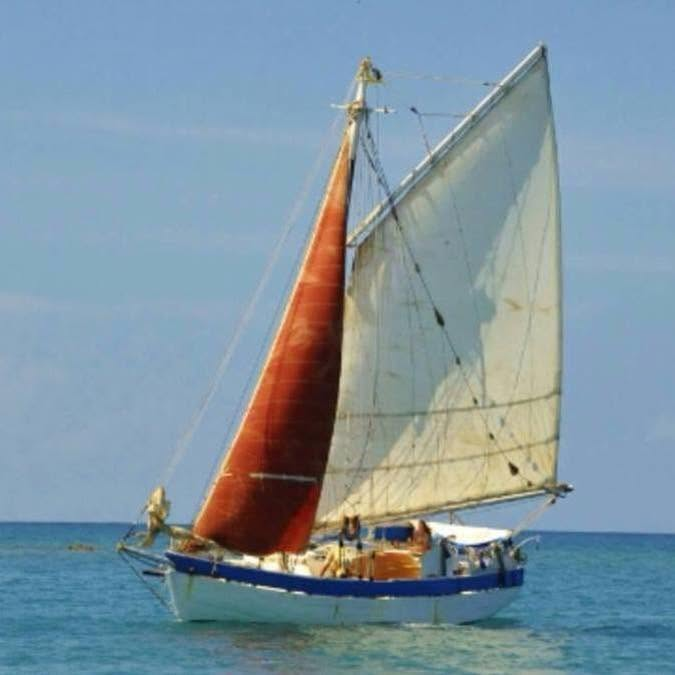
In 1977, John A. Smith learned that the Mermaid was for sale, and for next to nothing. The boat had no engine, it was too big for fishing and too small for cargo: nobody wanted it. Smith went down to the islands with a wad of dollars in hand and bought it from the sailors of Carriacou, who were half amused, half astonished.
Everyone warned him. A well-known yachtsman from the Virgin Islands told him the boat wasn't just watertight, it was sinking, and that repairing it would be like putting perfume on a pig. Smith paid, took the risk, and never regretted his decision. In the islands, they would soon call him "De white mon wid de black mon's boat.".
A whole life without an engine
Since then, Mermaid has been his home. The boat has never had an engine, and John Smith has never owned a car: everything is done by sail, oar, and mooring line, including anchoring. He has sailed from Maine to South America, carrying fruit, trees, wood, salt—anything that paid—from island to island, and taken on passengers for fifty dollars a day—without the slightest comfort, he warns: if you want a glass of water, bring it yourself.
Caribbean Compass He ranks among "the great eccentrics of Caribbean sailing," belonging to that vanishing breed of true solo sailors who don't mince words. He also writes: his essays are collected in a volume entitled Little Fish Big Pond. A plate is screwed above the downpipe cover: «God does not deduct from our allotted life-span, the time spent sailing» — God does not deduct time spent sailing from our lives.
The major overhaul of Honduras
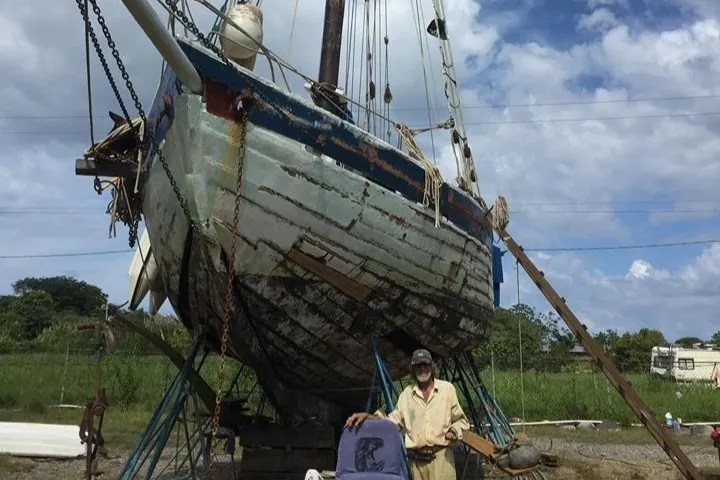
The story could have ended far from Carriacou. After running aground on a sandbar in Roatán, Honduras, Mermaid was hauled out to sea at Isla Guanaja for a complete overhaul: planking, frames, everything that half a century at sea and a grounding had left behind. The work dragged on. Seventeen months later, the boat was still ashore, and the captain found himself, in his own words, on the wrong side of the Caribbean.
In December 2019, he launched a fundraising campaign to finish the repairs and return to sea. The goal was reached: $5,100 was raised from seventy-three donors, exceeding the $5,000 requested. He had been aboard for forty-three years at that point.
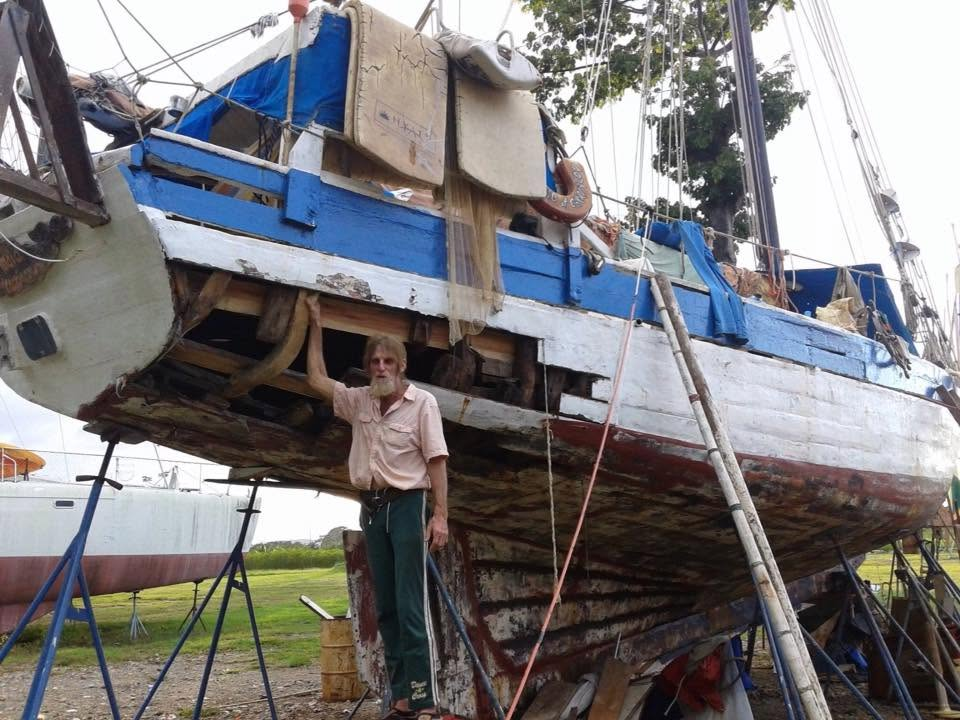
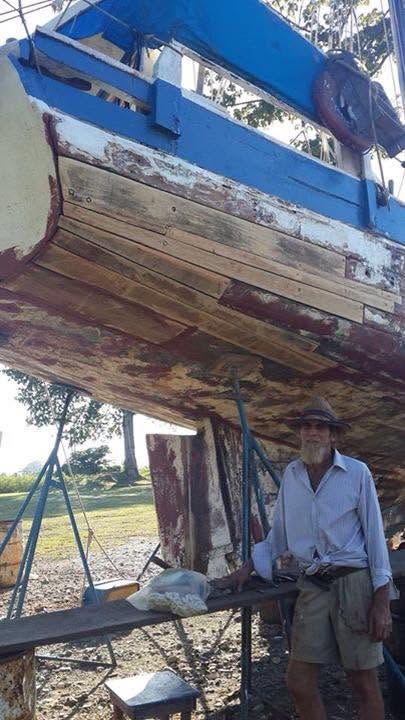
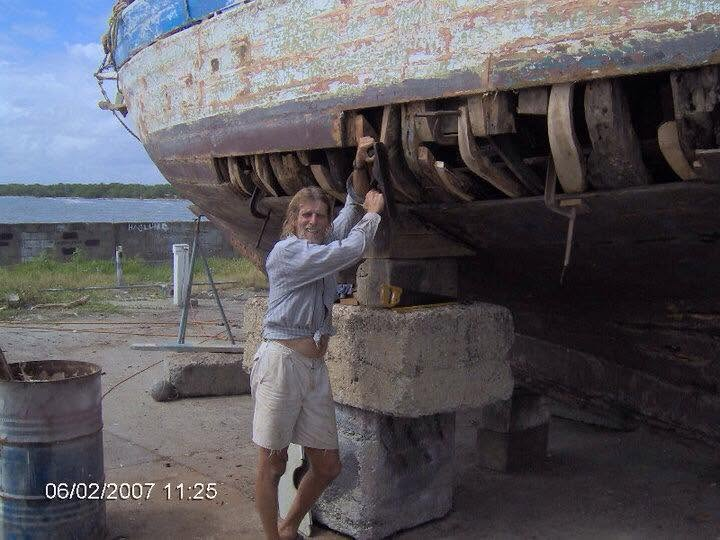
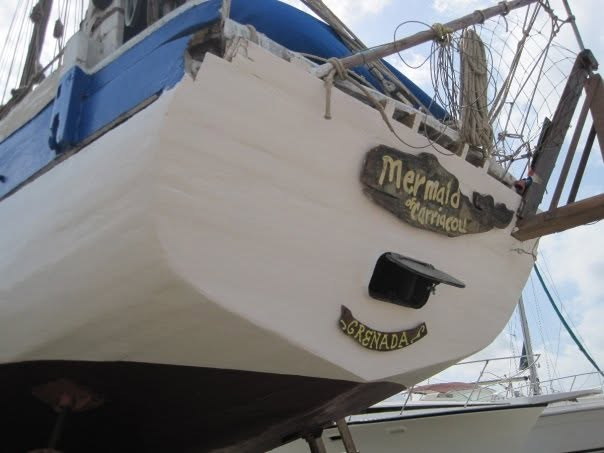
Zepherine McLaren died on December 29, 2009. The boat he drew from memory on a beach is still afloat.
June 25, 2019: Mermaid returns to the water
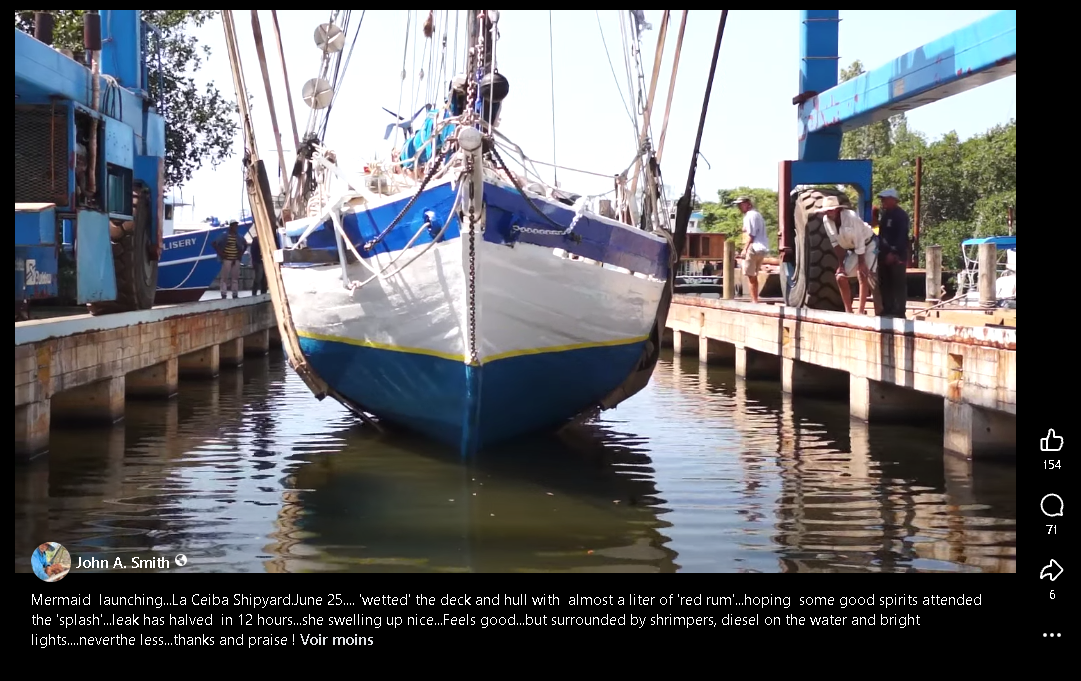
On June 25, 2019, at the La Ceiba shipyard, the boat was finally lowered back into the water. The captain doused the deck and hull with nearly a liter of red rum, hoping that some kind souls would witness the plunge. Twelve hours later, the leak had halved: the wood swelled, the planks closed around each other, an old wooden boat making itself watertight. All around, there were only shrimp boats, diesel fuel on the water, and spotlights—not exactly the ideal anchorage. He made do, and gave thanks.
2020: The world stops, Mermaid waits
Then came the pandemic. Shipyards closed, Caribbean islands shut down one after another, and travel was severed. The captain was stranded in Honduras, hundreds of miles from Carriacou, with a boat that had just been relaunched and finishing touches still pending. Departure was postponed month after month.
July 2021: The night Mermaid sank
July 2021: everything is finally ready to set sail. The crew consists of three sailors, and the course is set for Utila. As always for half a century, there is no engine on board: a tugboat pulls the sloop through the shoals of La Ceiba to take it out to sea.
The boat repeatedly ran aground on the sandy bottom, known to be dangerous. The maneuver went wrong: the sloop became stuck, the wind picked up, the sea became rough, and the tow cable snapped. This was the beginning of the disaster.
John A. Smith immediately set a reduced sail to steer clear of a leeward shore where four steel wrecks were rusting on the reef, amidst the rocks. But Mermaid was already taking on water. The new batteries, the two-thousand-gallon-per-hour pumps, the one-and-a-half-inch thermal pump bought for the occasion: everything was on board, and everything gave out within fifteen minutes. The leak worsened after the groundings.
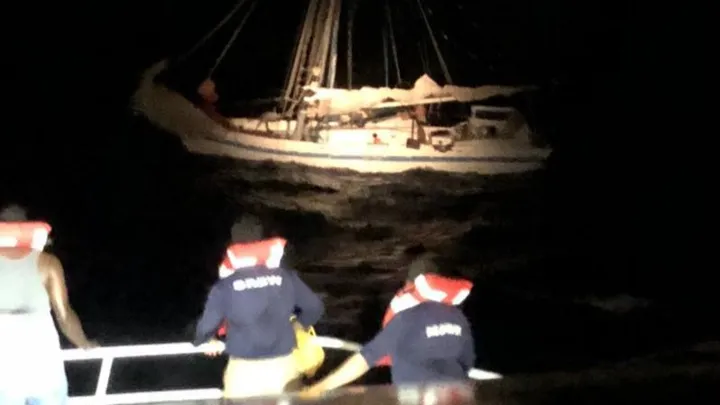
While the crew pumped by hand, cleared the strainers of the electric pump, and tried to reassemble the gasoline pump, water reached the batteries and the inverter. The captain prepared the life raft. Two ships arrived, including the Utila Dream, the large motor ferry that makes the daily crossing between La Ceiba and Utila. Passing offshore in the deep channel, the crew saw the sloop in distress and immediately changed course. Neither ship had a pump, and neither could take the sloop in tow. They came to evacuate the men.
John A. Smith was the last to board the lifeboat, his survival kit and flares in hand. A towline was thrown, the lifeboat was pulled alongside, and the three soaked sailors were hoisted aboard. He didn't turn around to watch the Mermaid sink. The Carriacou sloop had been his home for almost his entire life.
Why this shipwreck?
It must be said, because the sea is an easy judge: this shipwreck was not due to any sailor's fault. John A. Smith had over forty years of experience sailing on this particular boat and knew better than anyone the art of handling a sloop without an engine. Four things combined, and none of them were related to the maneuver.
- The shifting shallows of La Ceiba — The harbor entrance is sadly notorious for its sandbanks. Currents and rivers constantly shift the seabed: a safe route one week becomes a trap the next, and without daily seabed surveys, no one can avoid them for sure.
- The trap of the boat without an engine — without an engine on board, a tugboat was needed to cross the shallow waters. From the first grounding, the tugboat had to force its way through, the tension rose in the cable, and the cable broke.
- A tugboat that could no longer approach — a heavy boat with a deep draft, the tugboat could not retrieve the sloop where the wind was pushing it, amidst the reefs and wrecks: it would have run aground and sunk in turn. It witnessed the drift without being able to intervene.
- The leeward coast — the sloop then found itself adrift in a narrow channel bordered by reefs and old steel wrecks, driven towards the land by a strong wind. The captain's response, reducing sail to pull away from there, was the right one; there was no longer enough room, and the repeated impacts on the sand had already opened the joints of the wooden hull.
It was therefore a mechanical failure, occurring in the worst possible place, that doomed the Mermaid—not a navigational error. The only stroke of luck that day lay in the Utila Dream's passage through the channel: without that ferry being in the right place at the right time, the incident would not have resulted in just the loss of one ship.
After the shipwreck
Forty-four years after buying Mermaid for a handful of dollars, the captain finds himself with nothing: he is living in a tent on Guanaja Island, with the contents of his survival kit and donated clothing. On July 21, 2021, two friends, Andreas Weber and Joanna Bamba, launched a fundraising campaign to pay for his return and the first few months—two thousand euros for the trip, three thousand for lodging, clothing, and food. Sixty-two donors responded, and the goal was exceeded.
What John A. Smith is asking for is not another ship. It is to return to Carriacou, the island where Mermaid was born, and to live there among his seafaring friends.
Ciganka, the boat of a new beginning
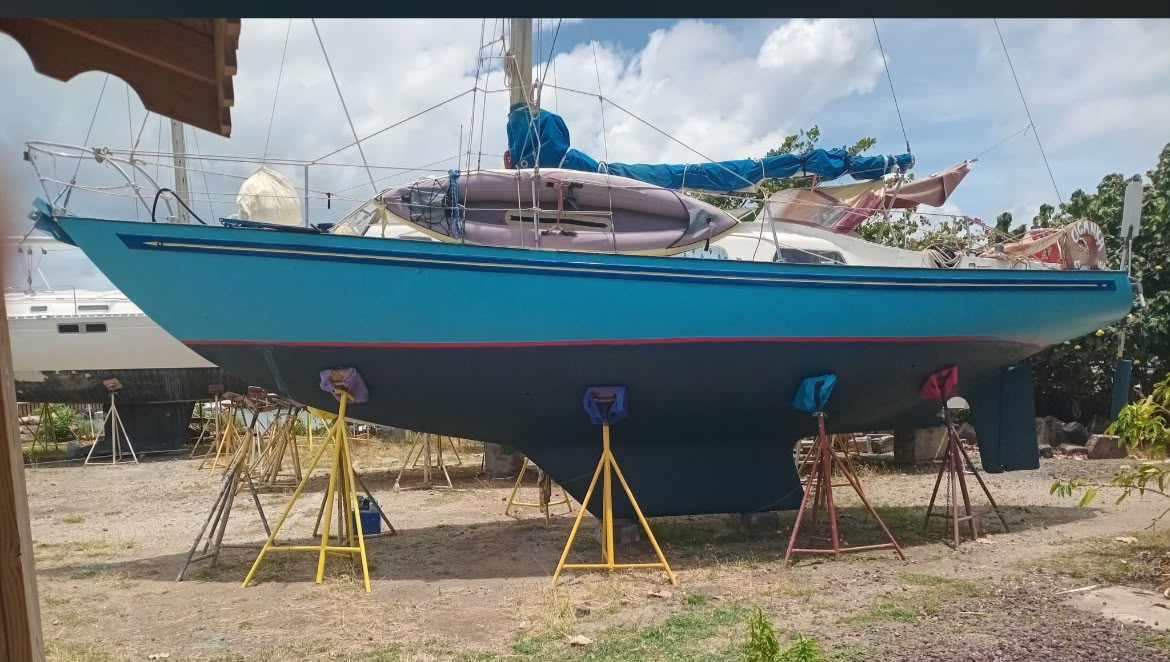
Back in Carriacou, John A. Smith bought another boat—but not a wooden sloop. This time, it was a Rival 34, a British production cruiser with a fiberglass hull, renowned for its seaworthiness. The new boat was named Ciganka. After fifty years on a shipwright's boat, the captain was now sailing in fiberglass.
On July 1, 2024, Hurricane Beryl, a Category 4 storm, struck Carriacou and Petite Martinique, devastating both islands. John A. Smith chose to remain on board. The boat was moored deep in the mangroves, using the old Caribbean method: the mangrove trees break the waves and wind, and the mooring lines are spread out in a star pattern among the roots.
The island emerged devastated from the cyclone, and Ciganka sustained heavy damage. But the fiberglass hull held, the boat remained afloat, and the captain escaped unharmed.
Contact — Mermaid of Carriacou
- Site — carriacoumermaid.com
- The appeal for donations was launched after the shipwreck in July 2021: Help John get home after the sinking of Mermaid.
Complete this form
Do you know this boat, its history, its voyages, or an official page where you can contact it? Help us enrich this information: your message goes directly to us.
Your message is forwarded by email to the site team; it is not stored in the site's database. The email address you provide is used solely to reply to you. You can request access to, correction of, or deletion of this information by writing to the site team.