
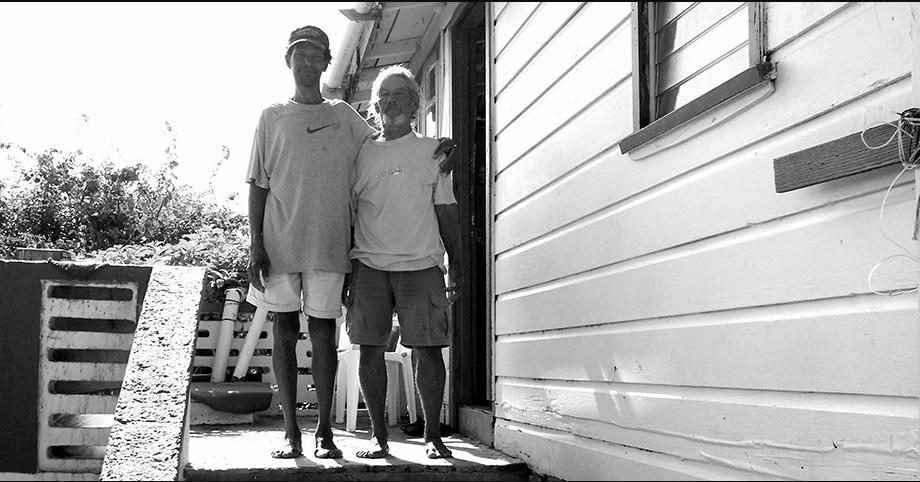
A shipwright in Windward, born on June 6, 1925, and died on December 19 (or 29), 2009. His name appears in at least four spellings depending on the source — McLaren, McClaren, MacLaren, McLawrence. His relatives called him "Zeph".
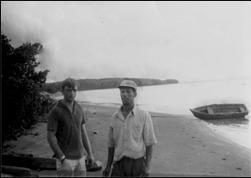
It is thanks to Bill Cameron, an English teacher who arrived in Carriacou in September 1967, that we owe most of what we can see today of Zepherine McLaren and its shipyard. Upon his death, he wrote that he took with him "a wealth of knowledge about the vernacular shipbuilding techniques used in Carriacou.".
Linton Rigg's bet
By the early 1960s, shipbuilding in Carriacou was dying out. Outboard motors, modern cargo ships, and fiberglass were making work sloops obsolete. The beach yards at Windward were emptying out.
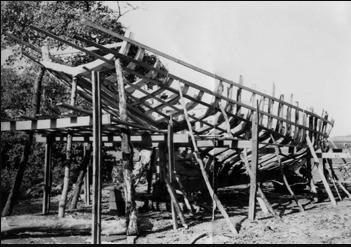
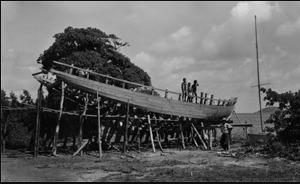
That's when J. Linton Rigg, a Jamaican yachtsman based in Carriacou, entered the scene. His plan was deceptively simple: commission a local shipwright to build a fast sloop, then publicly offer a reward of 500 Caribbean dollars—a considerable sum—to anyone who could build a boat on the island that could beat it. The shipwright he chose was Zepherine McLaren. The two men worked together for seven months.
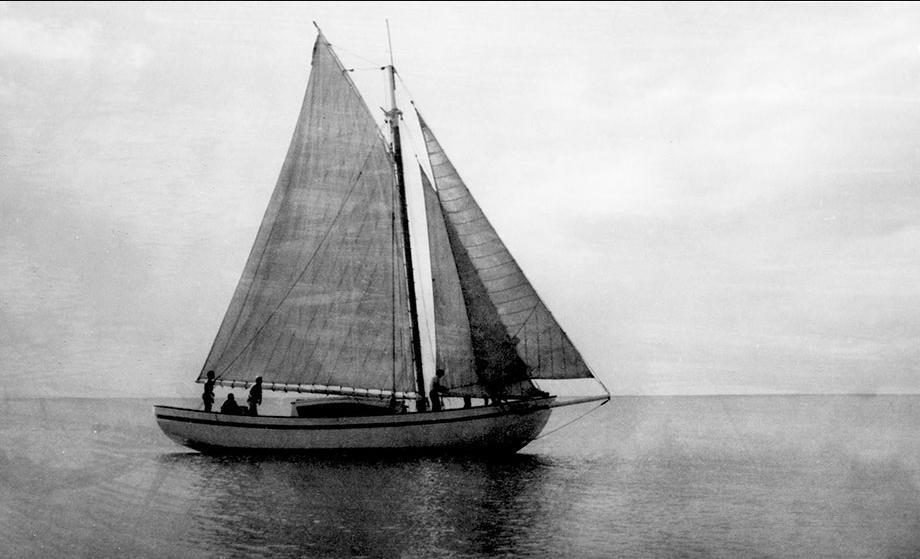
The Mermaid of Carriacou
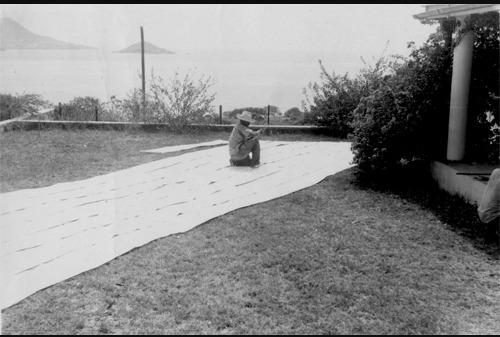
Once the hull was finished, all that remained were the sails. They were laid out and sewn on the lawn of Linton Rigg's garden, at "Tranquility", facing the sea.
The bet won
The first Carriacou Regatta took place seven months after the launch. The Mermaid won. And it continued to win: according to some sources, it dominated its class for nine consecutive years, with Zepherine McLaren himself winning the first three editions. It took years before a locally built boat managed to beat it.
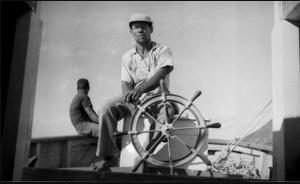
But the real result of the gamble lies elsewhere. By trying to beat the Mermaid, the shipwrights of Carriacou returned to building. The regatta became an annual event, sloops began sailing throughout the Lesser Antilles again, and shipbuilding once more became a respected profession on an island that had few other resources. All the boats mentioned elsewhere on this site—those of the Comptons, those of Alwyn Enoe—descend from this resurgence.
What the boat became
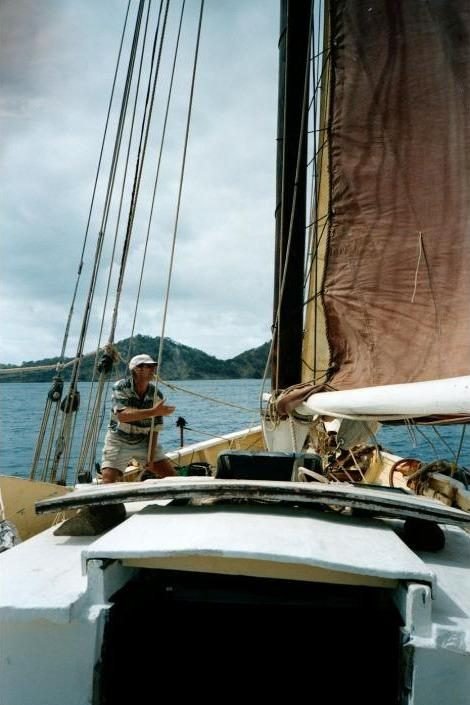
Linton Rigg died in Carriacou in 1976. The following year, an American learned that the Mermaid was for sale, and cheap: without an engine, too big for fishing and too small for cargo, nobody wanted it. He bought it, much to the amusement of the island's sailors, and has lived aboard ever since—always sailing it without an engine, from Maine to South America. Over the years, more than thirty-five planks have been replaced, including the stem, the transom, and the garboard strakes.
«"God does not deduct time spent at sea from our life expectancy." — sailors' proverb
Plate fixed above the Mermaid's companionway hatch
The boats he built
Three ships are definitively attributed to him. The rest of his work lives on only in Windward's memory.
Mermaid of Carriacou, 1968
A 44-footer, launched on January 21, 1968, in Windward. It was Linton Rigg's gamble and the project that revived the entire shipbuilding industry on the island. The boat dominated Lesser Antilles regattas for over a decade. His profile.
Good Expectations, 1984
11.70 meters, or about thirty-eight feet. A pure cargo ship, a large open hold, no cabin or engine, built at the very end of the age of sail. It is one of the last large ships he built. Restored in 2011 and 2012, it now sails from Saint Lucia—the only one of his ships still in commercial operation. His profile.
Sweetheart, 1986
10.97 meters, or thirty-six feet, now based in Antigua. The list of boats entered in the 2019 Antigua Classic Week lists it under the name Z. McLaren. It still races in classic regattas, decades after its launch. His profile.
The nameless ships
Here again, nothing is documented. The old-timers of Windward say that Zepherine McLaren spent most of his life building small fishing and daily transport boats, and that most never had a name painted on their hulls. They were known as "Zeph's boat," or simply by the name of their captain. When these heavy wooden hulls reached the end of their lives, after decades of service, it is said that their owners would quietly let them sink in the Grenadines mangroves to avoid removal costs. Their name and their story faded away there, beneath the mangrove roots.
His place
In January 2024, upon receiving the British Empire Medal, Alwyn Enoe cited Zepherine McLaren among the masters who had never been honored in their lifetime.
What remains to be established
The year the Mermaid was built. Most sources place the boat in the mid-1960s.
His other boats. This is the most frustrating omission. Bill Cameron writes that "his ships are still sailing in the Caribbean"—plural. None of the sources consulted name a single other one.
Contact — Zepherine McLaren
Do you know this shipwright, his background, the boats he built, or an official way to contact him? Help us improve this profile: your message goes directly to us.
Your message is forwarded by email to the site team; it is not stored in the site's database. The email address you provide is used solely to reply to you. You can request access to, correction of, or deletion of this information by writing to the site team.